
Reborn from the ashes of World War II as Europe’s premier experimental playground for bold contemporary architecture, the Netherlands’ second city offers a winter weekend break completely unlike any other in Europe. While neighboring Amsterdam enchants with 17th-century canal rings, Rotterdam dazzles in the crisp winter air with cutting-edge silhouettes, soaring cable-stayed bridges illuminated against indigo twilight skies, sheltered culinary cathedrals, and bustling historic docklands where vintage sailing luggers rest beside futuristic waterfront towers along the rushing waters of the Nieuwe Maas.
Winter is the ultimate season to experience Rotterdam’s visionary urban energy. Because the city was built for dynamic modern living, it excels in cold weather: vast covered food halls, world-class museums, heated high-speed water taxis, and futuristic glass structures provide luxurious warmth and indoor wonder without missing a beat. Over an immersive 48-hour winter getaway, you can navigate the dizzying tilted angles of Piet Blom’s yellow Cube Houses, gaze upward at the massive “Horn of Plenty” digital ceiling fresco inside the Markthal, cross river channels in roaring water taxis, and warm your bones in cozy brown cafes over bubbling croquettes and thick Dutch split pea soup.
Why Rotterdam in Winter Is Pure Magic
- Europe’s Capital of Cutting-Edge Architecture: From Rem Koolhaas’ De Rotterdam to MVRDV’s Depot Boijmans Van Beuningen, the city’s skyline is an exhilarating open-air museum that looks exceptionally sleek and cinematic under winter’s low northern light.
- Weatherproof Indoor Marvels: The Markthal, the world-first publicly accessible art depot, and extensive covered shopping plazas mean you can explore architectural masterpieces without spending prolonged hours exposed to cold rain or winds.
- Thrilling Water Taxi Network: Roaring across the stormy winter currents of the Nieuwe Maas aboard classic yellow water taxis offers an adrenaline-pumping, unforgettable perspective of the port and illuminated bridges.
- Historic Maritime Enclaves (Delfshaven & Oude Haven): While the city is modern, surviving pre-war pockets like Delfshaven—where the Pilgrims worshipped before departing for the New World in 1620—provide authentic Dutch canal charm with historic gin distilleries and antique windmills.
Maritime Winter Weather & Essential Packing Guide
Rotterdam has a North Sea coastal climate characterized by brisk ocean breezes, passing showers, and cool, crisp temperatures. Average winter daytime highs hover around 3°C to 7°C (37°F to 45°F), dropping near freezing at night. While heavy snowfall is infrequent, damp sea winds can make the air feel distinctly frosty along open river piers and bridges. Daylight lasts from approximately 8:15 AM to 4:45 PM.
- Windproof & Water-Resistant Shell: The Dutch coast is famously breezy. An insulated, waterproof technical jacket with a secure hood provides superior weatherproofing compared to an open umbrella against gusts.
- Waterproof Walking Shoes: Rotterdam is an expansive walking city with modern paved quays, boardwalks, and stone docklands. Comfortable, water-resistant walking shoes or boots keep feet warm and dry.
- Versatile Layers: Indoor spaces (the Markthal, museum atriums, water taxis) are thoroughly heated, so smart layering with breathable knit sweaters and lightweight thermals allows effortless transitions.
- Thermal Gloves & Beanie: Essential for enjoying windy waterfront views along the Erasmus Bridge and outdoor viewing terraces atop the Euromast or Depot Boijmans.
The Perfect 48-Hour Rotterdam Winter Weekend Itinerary
Day 1: Modern Icons, The Cube Houses & Covered Markthal
Begin your morning at Rotterdam Centraal Station, an architectural triumph with its gleaming angled stainless-steel canopy pointing directly into the city center. Walk down Luchtsingel, the whimsical 390-meter yellow wooden pedestrian footbridge that revitalized the northern district. Stroll into the Blaak district to encounter the famous Kubuswoningen (Cube Houses), designed in 1984 by visionary architect Piet Blom. Step inside the Kijk-Kubus museum house to experience how living at a 45-degree tilted angle actually feels.
Directly opposite sits the Markthal, the iconic horseshoe-shaped building housing hundreds of apartments above a vast, enclosed culinary hall. Look up at the 11,000-square-meter artwork by Arno Coenen titled “Horn of Plenty” covering the arched ceiling before sampling warm Dutch stroopwafels pressed fresh from the iron. In the afternoon, explore the nearby Oude Haven (Old Harbour), admiring historic restored sailing clippers, and climb to the top of Het Witte Huis (The White House)—Europe’s first skyscraper, completed in 1898. Finish your evening dining in the rejuvenated Katendrecht neighborhood, once the rough sailor’s quarter and now a culinary paradise of artisanal bakeries and craft cider houses.
Day 2: Waterfront Skylines, Water Taxis & Historic Delfshaven
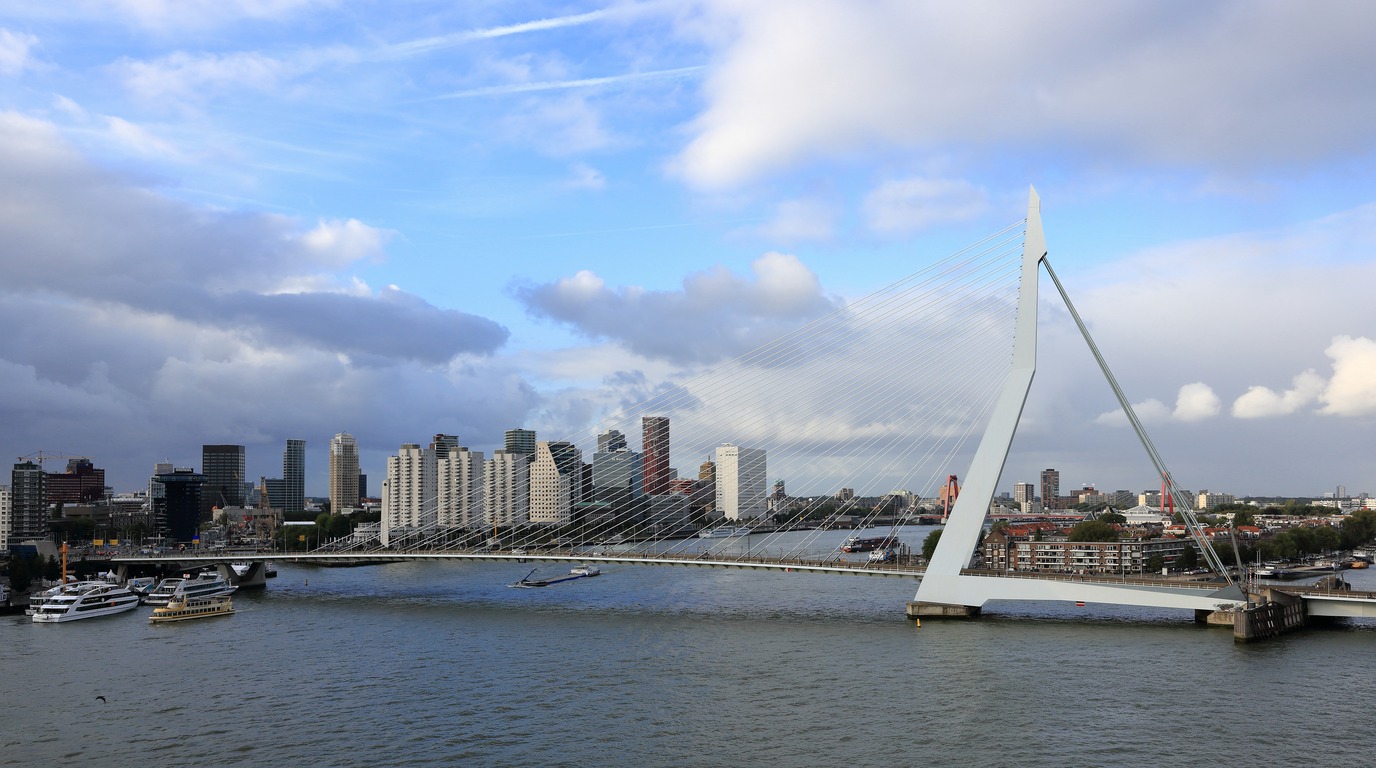
Start your second day boarding a swift water taxi from Leuvehaven to the Kop van Zuid. Marvel at the gleaming Erasmus Bridge (“De Zwaan”) with its 139-meter asymmetric pale pylon towering over the water. Tour Hotel New York, the grand former Art Nouveau headquarters of the Holland America Line where millions of European emigrants boarded steamships for North America. Warm up with rich coffee and fresh Dutch apple pie in the historic wood-paneled dining room.
In the afternoon, visit the world-renowned Depot Boijmans Van Beuningen in Museumpark, the world’s first publicly accessible art storage facility wrapped in 1,664 mirrored glass panels reflecting the surrounding winter trees. Climb to the rooftop forest for a panoramic 360-degree city view. Complete your weekend break in Historic Delfshaven, wandering along quiet frozen canals lined with 17th-century stepped-gable warehouses and visiting the Pelgrimvaderskerk before settling into a canal-side tavern for an evening jenever tasting.
Must-Try Winter Flavors & Traditional Dutch Comfort Food
Dutch winter cuisine revolves around hearty, robust sustenance (winterkost) crafted to banish the chill of North Sea winds with soul-warming soups, melted gouda, and spiced pastries.

- Erwtensoep (Snert): The undisputed king of Dutch winter dining. A rich, thick green split pea soup slow-simmered overnight with pork belly, smoked sausage (rookworst), celeriac, potatoes, and leeks until so dense a spoon can stand upright in the bowl. Traditionally served with dense dark rye bread topped with cured katenspek bacon and spicy mustard.
- Bitterballen & Kroketten: Crisp, golden-fried breadcrumb spheres filled with piping-hot, velvety beef ragout, dipped in sharp Zaanse mustard. The mandatory bar snack accompaniment to cold winter lagers.
- Stamppot: Fluffy mashed potatoes whipped with winter greens (such as curly kale or sauerkraut), crowned with a pool of savory meat gravy and a giant smoked Gelderse rookworst.
- Fresh Stroopwafels & Poffertjes: Two thin waffle wafers sliced and sandwiching hot, gooey cinnamon caramel syrup, or miniature buckwheat yeast pancakes served piping hot, smothered in melting dairy butter and powdered sugar.
Geometric Wonders: Piet Blom’s Cube Houses
Nowhere is Rotterdam’s post-war architectural bravery more apparent than at the Overblaak development, where traditional city planning was playfully turned on its head.

Commissioned in the late 1970s to build a residential bridge across a major motorway, architect Piet Blom tilted standard cube-shaped dwellings at 45 degrees and hoisted them onto hexagonal concrete pylons. The design represents an abstract forest, with each individual cube functioning as an architectural tree. Wandering through the elevated central courtyard feels like entering an Escher painting. The Kijk-Kubus show house reveals clever custom cabinetry, angled window ledges, and triangular roof skylights looking out into the winter clouds.
Architectural Wonders: The Markthal & Mirrored Depots
Rather than settling for utilitarian function, Rotterdam repeatedly turns municipal infrastructure into breathtaking works of contemporary art.

Opened in 2014, the Markthal combines a cavernous horseshoe-shaped market hall with 228 integrated luxury apartments forming the outer curve. Both ends are enclosed by immense cable-net glass facades that can withstand the fiercest North Sea winter gales. Inside, the ceiling glows with vibrant 3D projections of giant raspberries, flowers, cheese rounds, and wheat stalks. Down on the market floor, artisanal cheese mongers, surinamese roti bakers, and fresh herring counters provide an endlessly warm, sensory shelter during cold winter afternoons.
Practical Logistics: Transport, Water Taxis & Tips
- Arriving from Amsterdam Schiphol Airport (AMS): Direct high-speed NS Intercity Direct trains connect Amsterdam Schiphol Airport directly to Rotterdam Centraal in just 26 minutes, departing every 15 minutes.
- Navigating via Watertaxi: Rotterdam’s yellow watertaxis operate from 50 dock locations across the city. Booking via phone or their app allows you to zip between attractions like Hotel New York, Euromast, and Oude Haven in minutes while enjoying breathtaking river vistas.
- Public Transit (RET): Rotterdam’s metro, tram, and bus network is fully integrated with contactless payment (OVpay). Simply tap your debit/credit card or smartphone at station turnstiles and vehicle doors upon entry and exit.
- Day Trip Tip: Kinderdijk Windmills: Located 15 km east of the city, the UNESCO-listed 19 historic windmills of Kinderdijk look magical across the frozen canals in winter. Catch the Waterbus line 21 from Erasmusbrug directly to Kinderdijk in 30 minutes.
Frequently Asked Questions
Is Rotterdam worth visiting in the winter?
Yes, Rotterdam is arguably the most weatherproof city break in the Netherlands. Its world-class indoor markets, covered museums, heated water taxis, and futuristic architecture make it an exciting, effortless 48-hour winter destination.
How does Rotterdam compare to Amsterdam for a winter getaway?
Rotterdam is vastly less congested, more spacious, and architecturally groundbreaking compared to Amsterdam. It offers a contemporary, forward-looking urban energy alongside rich maritime heritage and cutting-edge dining at lower accommodation rates.
How many days do you need in Rotterdam?
A 48-hour weekend (2 full days) is the ideal duration to discover the city center, experience the Cube Houses, Markthal, and Depot Boijmans, ride water taxis across the harbour, and enjoy an afternoon in historic Delfshaven or Kinderdijk.
Pin This Rotterdam Winter Guide for Later
Planning your Dutch architecture escape? Save this pin to your Pinterest board so you have all the best modern viewpoints, water taxi tips, and cozy food hall recommendations ready for your trip!
Leave a Comment