
Enveloped in soft plumes of thermal steam rising into the crisp Somerset winter air, the UNESCO World Heritage city of Bath represents the pinnacle of timeless British elegance and ancient Roman luxury. While summer draws busloads of day-trippers to the West Country, winter returns Bath to its romantic Regency roots: warm, honey-colored Georgian Bath stone glowing under afternoon winter light, open coal fires roaring in historic coaching inns, delicate clinking of bone china during fireside afternoon teas, and naturally heated 46°C thermal mineral waters bubbling up through ancient lead conduits just as they did two thousand years ago for Roman legionnaires and Celtic worshippers of the goddess Sulis Minerva.
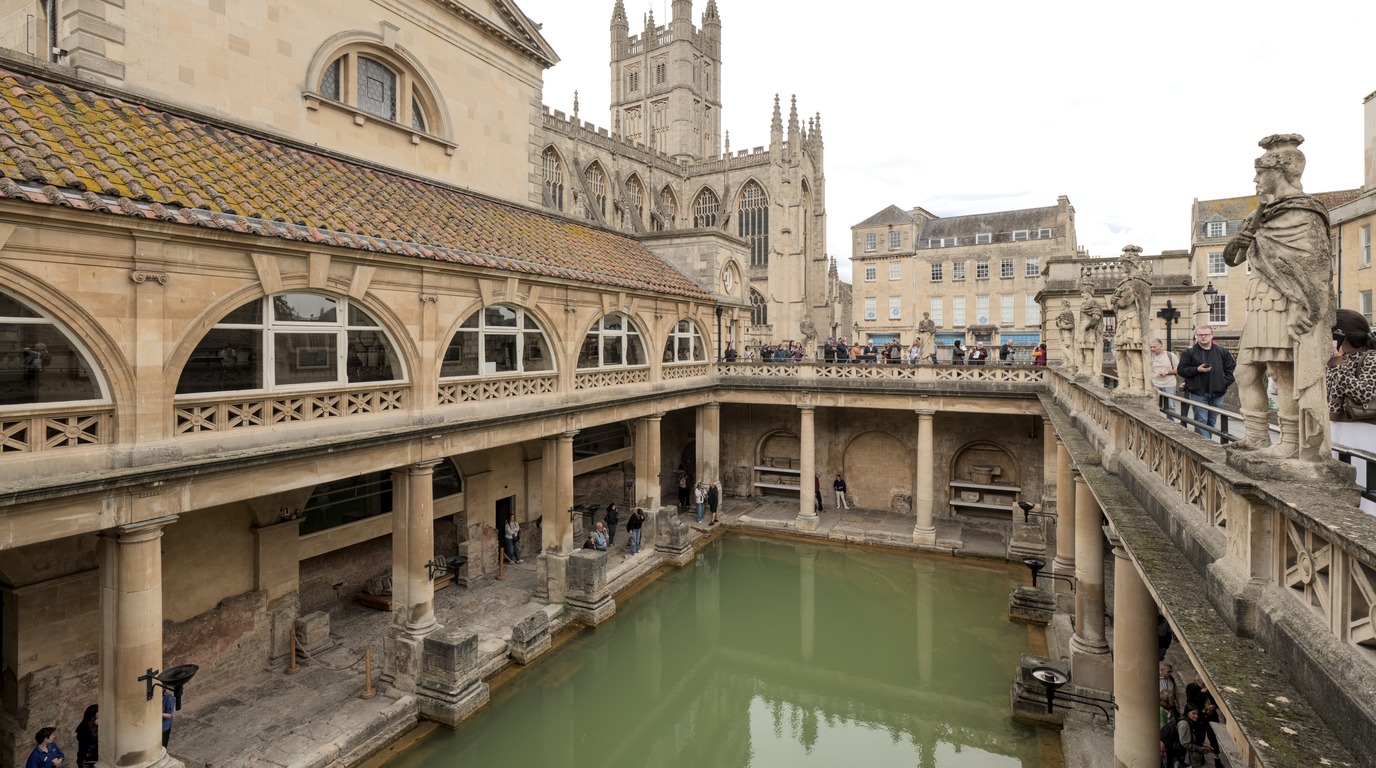
An easy 80-minute direct train journey from London Paddington, Bath is one of the United Kingdom’s premier winter weekend escapes. Designed during the Georgian era as a fashionable wellness retreat for aristocrats and literary figures like Jane Austen and Mary Shelley, the city is uniquely configured for winter comfort. Compact, highly walkable, and sheltered by rolling hills, you can effortlessly transition between the world-renowned Roman Baths museum, the modern rooftop thermal pools of Thermae Bath Spa, the sweeping architectural curve of the Royal Crescent, and atmospheric tearooms serving warm, freshly baked Bath buns slathered with rich clotted cream. Over 48 hours, Bath in winter delivers an intoxicating blend of ancient history, architectural harmony, and quintessentially British coziness.
Why Bath in Winter Is Pure Magic
- Naturally Steaming Roman Thermal Springs: Seeing mist curl above the emerald waters of the Great Bath on a frosty morning is one of the great sensory experiences of Europe. With thermal waters constantly emerging from 2,000 meters beneath the earth at 46°C (115°F), the ancient Roman complex feels alive with primal warmth.
- Golden Georgian Architectural Harmony: Bath is Britain’s architectural jewel. Constructed entirely from oolitic limestone known as Bath Stone, the city’s neoclassical crescents, circuses, and palladian bridges radiate a warm, buttery honey hue that counteracts dreary winter skies.
- Rooftop Bathing in Natural Mineral Waters: At Thermae Bath Spa, you can soak in naturally warm mineral-rich waters in an open-air rooftop pool while gazing across steaming vapor toward the illuminated gothic spires of Bath Abbey and the surrounding Somerset hills.
- Quintessential Afternoon Tea Traditions: Bath practically invented afternoon tea culture. From the chandelier-lit Pump Room accompanied by a classical string trio to 500-year-old Sally Lunn’s Historic Eating House, warming up indoors over loose-leaf tea and fresh scones is an essential ritual.
- Intimate Jane Austen Atmosphere: With fewer tourist crowds, wandering cobblestone lanes like Gravel Walk, Queen Square, and Milsom Street feels like stepping straight into the pages of Persuasion or Northanger Abbey.
Somerset Winter Weather & Essential Packing Guide
Bath experiences a temperate maritime climate sheltered within the Avon Valley. Winter daytime temperatures typically hover between 5°C and 9°C (41°F to 48°F), dropping to 1°C to 4°C (34°F to 39°F) after nightfall. Crisp, clear sunny winter days produce breathtaking low golden light on Georgian stone facades, while occasional West Country mist and rain showers are common. Daylight lasts from roughly 8:15 AM to 4:30 PM, making cozy indoor tea breaks the natural centerpiece of late afternoons.
- Tailored Wool Overcoat or Quilted Jacket: Bath is a remarkably stylish city. A classic tailored wool coat, trench coat, or warm Barbour-style quilted jacket fits in seamlessly at afternoon teas and fine dining rooms.
- Comfortable Walking Boots: Bath is built across steep hillsides. Exploring Lansdown Crescent, Prior Park, or walking between the river and the Royal Crescent requires supportive, water-resistant leather walking shoes or Chelsea boots.
- Cashmere or Knit Scarf & Gloves: Essential for enjoying riverside walks along Pulteney Bridge and taking in evening views from outdoor spa terraces.
- Compact Windproof Umbrella: Passing English showers are part of Somerset life; keep a sturdy umbrella in your tote bag for effortless exploration.
The Perfect 48-Hour Bath Winter Weekend Itinerary
Day 1: The Roman Baths, Bath Abbey & Fireside Afternoon Tea
Begin your morning entering the Roman Baths adjacent to the Abbey Courtyard. Stand on the Victorian Terrace overlooking the Great Bath as morning steam swirls around statues of Roman emperors. Descend into the subterranean museum to touch the ancient Roman lead conduits, view the gilt bronze head of Minerva, and read curses carved into pewter tablets cast into the Sacred Spring. Next door, admire the intricate fan-vaulted stone ceiling of Bath Abbey, climbing the 212 steps of the Abbey Tower for sweeping 360-degree vistas over the winter valley.
By early afternoon, walk through the Abbey Green to Sally Lunn’s Historic Eating House, occupying one of Bath’s oldest medieval buildings (circa 1482). Descend to the cellar museum to see the original kitchen oven where French Huguenot refugee Solange Luyon (Sally Lunn) first baked her famous brioche buns in 1680. Savor a toasted Sally Lunn Bunn crowned with clotted cream and strawberry jam or savory Welsh rarebit. As evening sets, stroll across Robert Adam’s 1774 Pulteney Bridge, admiring shop windows perched over the rushing waters of the River Avon weir before dinner at a cozy gastro-pub like The Garrick’s Head.
Day 2: The Royal Crescent, The Circus & Twilight Rooftop Soaking
Start your second day walking up elegant Gay Street toward The Circus, John Wood the Elder’s neoclassical circular plaza inspired by Rome’s Colosseum, featuring stone friezes carved with 528 distinct Masonic and astrological symbols around majestic plane trees. Continue westward along Brock Street to arrive at the breathtaking sweep of the Royal Crescent—30 Grade I listed townhouses fronted by 114 Ionic columns curving across a lush green lawn. Step inside No. 1 Royal Crescent, a painstakingly restored historic museum showcasing how wealthy 18th-century aristocrats lived and entertained during the “Bath Season.”
In the afternoon, browse independent bookshops, artisan antique dealers, and cashmere boutiques along Milsom Street and Margaret’s Buildings. As dusk falls at 4:30 PM, make your way to Thermae Bath Spa. Change into a robe and head directly to the open-air rooftop pool. As twilight deepens into starry night, soak in 38°C natural mineral-rich spring waters while watching the floodlit towers of Bath Abbey and the honey-stoned cityscape glow against the frosty Somerset evening. Complete your weekend break with a glass of crisp local Somerset cider or single-malt whisky beside an open hearth.
Must-Try Winter Flavors & Traditional West Country Delicacies
Dining in Bath is steeped in regional West Country abundance: rich dairy from Somerset pastures, orchard apples, game meats, and historic baked confections that have comforted visitors for centuries.

- The Sally Lunn Bunn: An authentic Bath delicacy. Neither a cake nor ordinary bread, this large, golden, enriched yeast brioche is feather-light and served toasted in sweet halves (with cinnamon butter or homemade preserves) or savory halves (with smoked salmon or slow-cooked ham).
- The Bath Bun: A distinct local creation created by Dr. William Oliver in the 18th century—a rich, sweet yeast dough bun flavored with milk, butter, and currants, topped with crushed sugar crystals and candied caraway seeds.
- West Country Cream Tea: Warm, freshly baked golden scones served with strawberry preserve and thick, golden-crusted clotted cream. In Somerset, traditionalists enjoy spreading the preserve first, crowned with a generous dollop of cream.
- Somerset Farmhouse Cheddar & Cider: Genuine Somerset cheddar aged in nearby Cheddar Gorge caves, boasting a sharp, nutty, crystalline bite, paired with warm spiced mulled cider crafted from West Country heritage orchards.
Georgian Grandeur: The Royal Crescent & The Circus
Bath’s 18th-century expansion redefined European town planning, creating an ensemble of neoclassical architecture unmatched anywhere in the world.

Conceived by architect John Wood the Younger and built between 1767 and 1774, the Royal Crescent was designed to mimic the sweeping curves of nature. While each homeowner was permitted to build their interior however they saw fit, the facade was strictly mandated to present a uniform front of colossal Ionic columns and balustraded parapets. In the winter quietude, walking across the frost-dusted lawn of Royal Victoria Park provides an unobstructed, cinematic vista of this architectural marvel.
Picturesque River Views: Pulteney Bridge & The River Avon Weir
One of the most photogenic river crossings in the world, Pulteney Bridge was completed in 1774 to connect the historic city with the new Georgian suburb of Bathwick.

Designed by Scottish architect Robert Adam after drawings of the Ponte Vecchio in Florence and the Rialto in Venice, Pulteney Bridge is one of only four bridges on earth with shops built across its entire span. Below the bridge, the River Avon cascades over a striking three-tiered horseshoe weir. In winter, higher river water levels create a dramatic, rushing waterfall that thunders beneath the stone arches.
3 Insider Tips for Visiting Bath in Winter
1. Book the Twilight Spa Session: At Thermae Bath Spa, time your two-hour session for 4:00 PM to 6:00 PM. This lets you experience the open-air rooftop pool in the fading daylight, watch the sunset over the hills, and enjoy the illuminated city landmarks under darkness.
2. Taste the Warm Thermal Mineral Water: At the end of your Roman Baths visit or inside the Pump Room restaurant, sample a glass of warm, treated mineral water from the drinking fountain. Rich in 43 different minerals including sulfate, calcium, and sodium, it has been consumed for medicinal health since the 17th century.
3. Stroll Gravel Walk at Dusk: The quiet pedestrian path running behind the Royal Crescent and Royal Victoria Park was known as the “Lovers’ Lane” of Regency Bath. It served as the setting for the romantic reconciliation between Anne Elliot and Captain Wentworth in Jane Austen’s Persuasion, and in winter, illuminated by cast-iron street lamps, it remains one of the most romantic walkways in Britain.
Where to Stay & How to Get Around in Winter
- City Center / Abbey Quarter: Ideal for walking everywhere without requiring a car or taxis. Hotels around Queen Square or Argyle Street put the Roman Baths, Abbey, and top restaurants within 5 minutes.
- Upper Town (Near The Circus & Royal Crescent): Quieter residential neighborhoods offering elegant boutique hotels and historic bed-and-breakfasts set inside authentic Georgian townhouses.
- Arriving by Train: Bath Spa railway station is situated right at the southern edge of the city center. Great Western Railway (GWR) operates fast, frequent trains from London Paddington (80 minutes), Bristol Temple Meads (12 minutes), and Cardiff (1 hour). Once in Bath, all central sights are completely accessible on foot.
Frequently Asked Questions
Is Bath good to visit in the winter?
Bath is arguably at its best in winter. The combination of steaming ancient thermal waters, outdoor heated rooftop bathing, atmospheric Georgian streets bathed in low golden light, and roaring fires in historic pubs makes it one of the UK’s coziest cold-weather destinations.
Can you bathe in the ancient Roman Baths?
No, the original Roman Baths are an archaeological museum site preserved for viewing. However, directly adjacent is the contemporary Thermae Bath Spa, which uses the exact same natural mineral-rich thermal waters in luxurious modern indoor pools and a panoramic open-air rooftop pool.
Is Bath walkable in 48 hours?
Yes, Bath is exceptionally compact. The distance from Bath Spa station in the south to the Royal Crescent in the north is barely a 20-minute gentle uphill stroll through shopping lanes and pedestrian squares.
Pin This Bath Winter Guide
Planning a romantic weekend getaway to Somerset? Save this 48-hour Bath winter itinerary to your Pinterest UK Travel or Weekend Breaks board so you have all the best viewpoints, tearooms, and thermal spa tips ready for your trip!
Leave a Comment