
When winter blankets the marble alleys of northern Italy, Verona sheds its summer crowds and transforms into a cinematic haven of terracotta towers, misty riverbanks, and fragrant wine taverns. Bathed in the soft amber light of short December and January afternoons, Shakespeare’s legendary city of romance reveals its truest, most authentic soul—one anchored in ancient Roman stonework, warm Scaliger fortresses, and steaming plates of rich Risotto all’Amarone.
While summer visitors endure blistering heat and winding queues, winter travelers in Verona enjoy uninterrupted solitude across world-class heritage landmarks. Nestled along the dramatic loop of the turquoise Adige River at the foot of the Lessini Mountains, Verona balances majestic Roman engineering with Venetian Renaissance refinement. Whether you are stepping through 2,000-year-old amphitheater arches, sipping full-bodied Amarone della Valpolicella in subterranean cellars, or watching Alpine mist roll over the Gothic battlements of Castelvecchio, this curated 48-hour winter weekend guide ensures you experience the very finest of the Veneto.
Why You’ll Love Verona in Winter
- Uncrowded Roman Monuments: Wander through the majestic 1st-century Roman Arena and ancient forum squares with virtually no lines or tour bus congestion.
- Deep Culinary Comfort: Winter is the prime season for hearty Venetian cuisine, centered on slow-braised beef, aged Monte Veronese cheese, and iconic Amarone-infused risotto.
- Magical Festive Atmosphere: From illuminated arcades in Piazza Bra to charming seasonal markets in Piazza dei Signori, the city glows with refined northern Italian elegance.
- Seamless Walkability: Verona’s compact UNESCO-listed historic center (Centro Storico) is completely pedestrian-friendly and connected by high-speed Frecciarossa trains to Milan, Venice, and Bologna.
Key Winter Highlights & Local Savoring

- Risotto all’Amarone: The undisputed king of Veronese gastronomy. Vialone Nano rice slow-simmered in rich Amarone della Valpolicella wine, beef broth, and aged Monte Veronese cheese until creamy and ruby-hued.
- Amarone & Valpolicella Ripasso: World-renowned dry red wines crafted from partially dried Corvina, Rondinella, and Molinara grapes, boasting complex notes of dried cherry, cocoa, and warm spice.
- Pandoro di Verona: The original golden, star-shaped Christmas cake created in Verona in 1894 by Domenico Melegatti, showered generously in powdered vanilla sugar.
- Pastissada de Caval: A traditional slow-cooked horse meat stew braised for hours in red wine, cinnamon, cloves, and onions, served over golden creamy polenta.
48-Hour Verona Winter Weekend Itinerary
Day 1: Ancient Roman Grandeur, Piazza delle Erbe & Osteria Culture
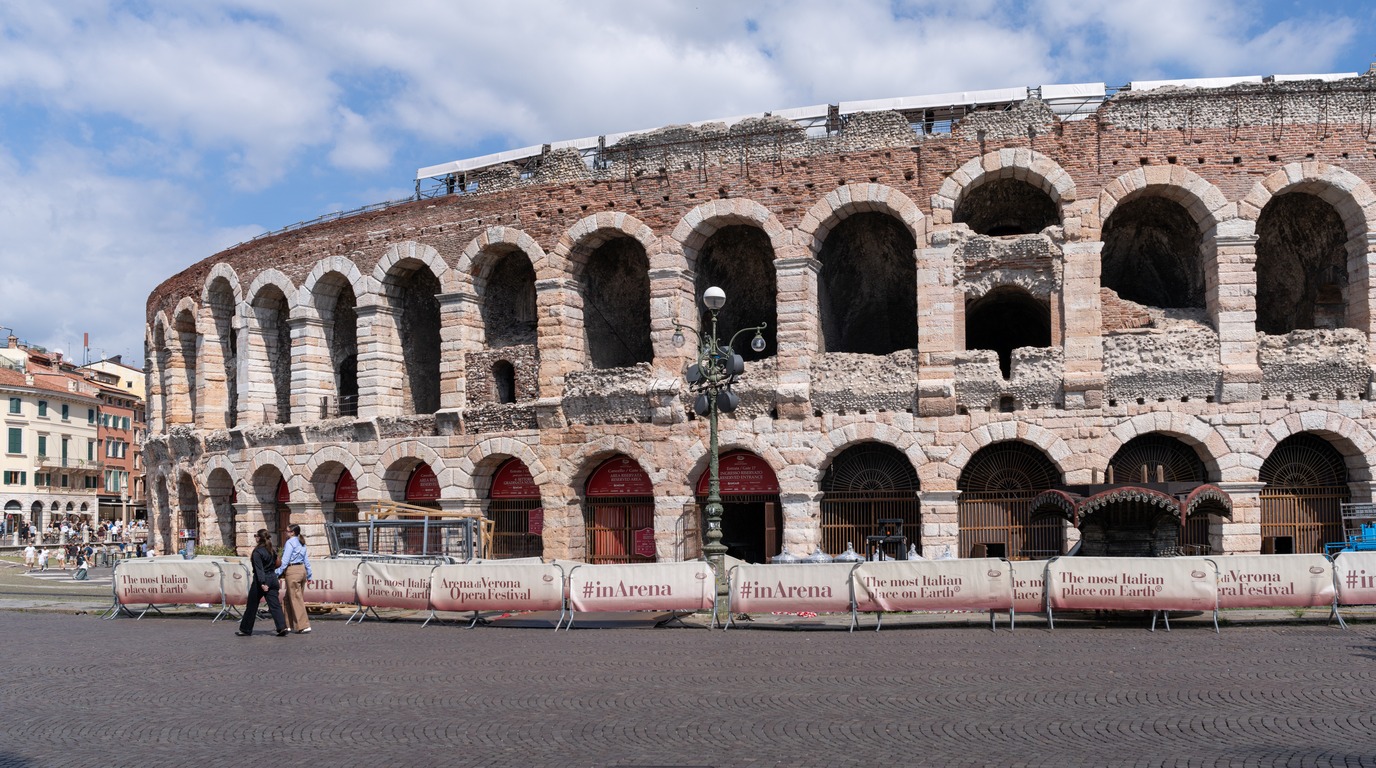
09:00 AM – Morning in Piazza Bra & The Roman Arena: Begin your winter journey in Piazza Bra, Verona’s expansive grand piazza framed by pastel neoclassical palazzi. Step inside the magnificent Arena di Verona, completed in 30 AD and remarkably older than Rome’s Colosseum. In winter, you can explore the soaring pink Valpolicella marble tiers in near silence, enjoying crisp views across the snow-capped Alpine foothills.
11:30 AM – Stroll Along Via Mazzini to Piazza delle Erbe: Walk along polished pink marble paving stones down elegant Via Mazzini, window-shopping classic Italian fashion boutiques. Emerge into Piazza delle Erbe, the lively heart of Verona built directly over the ancient Roman Forum, dominated by medieval frescoed facades, the Madonna Verona fountain, and the towering Torre dei Lamberti.

01:30 PM – Historic Osteria Lunch & Wine Tasting: Duck into a warm, wood-paneled tavern such as Osteria del Bugiardo or Antica Bottega del Vino. Order a glass of robust Valpolicella Superiore alongside warm crostini con lardo and a piping hot bowl of bigoli pasta.
03:30 PM – Ascend Torre dei Lamberti: Take the elevator or climb the stairs of the 84-meter-tall Torre dei Lamberti. The winter panorama over Verona’s terracotta tile roofs, church spires, and meandering Adige River is unforgettable under the golden 4:00 PM sunset.
07:00 PM – Evening Dinner in Centro Storico: Conclude Day 1 with an authentic multi-course dinner featuring slow-stirred Risotto all’Amarone and tender braised meats, followed by a glass of dessert Recioto di Valpolicella.
Day 2: Scaliger Fortresses, Roman Bridges & Panoramic Vistas
09:30 AM – Castelvecchio Fortress & Ponte Scaligero: Start your second morning at Castelvecchio, the formidable 14th-century red-brick castle built by the ruling Scaliger dynasty. Walk across the stunning Ponte Scaligero (Castelvecchio Bridge), admiring the M-shaped dovetail battlements as the cold green waters of the Adige rush below.

12:00 PM – Verona Cathedral & Santa Anastasia: Cross back into the historic center to marvel at the soaring Gothic vaults of the Basilica of Santa Anastasia and the striking Romanesque Verona Cathedral (Duomo), containing Titian’s masterpiece *The Assumption of the Virgin*.
02:30 PM – Ponte Pietra & Castel San Pietro Funicular: Cross the ancient Ponte Pietra, a 1st-century BC Roman stone arch bridge that spans the river towards the hillside quarter of Veronetta. Board the sleek Funicolare di Castel San Pietro to reach the panoramic terrace of Castel San Pietro for the most famous postcard view of Verona enveloped in misty winter twilight.
06:00 PM – Aperitivo in Veronetta: Wrap up your weekend with an authentic Veronese *Spritz con Select* or glass of Amarone at a local enoteca on the left bank of the Adige, savoring fresh artisan Pandoro.
3 Insider Secrets for Visiting Verona in Winter
1. Invest in the Verona Card: For just €20 (24-hour) or €25 (48-hour), the Verona Card grants free entry to the Roman Arena, Torre dei Lamberti, Castelvecchio Museum, Juliet’s House, and all four historic churches, while including unlimited city bus transit.
2. Time Castel San Pietro for Sunset (4:30 PM): In winter, twilight sets in early across northern Italy. Arrive at Castel San Pietro by 4:15 PM to watch the warm city lamps flicker on across the river as the sun dips behind the distant Pre-Alps.
3. Juliet’s Balcony Reality Check: Juliet’s House (Casa di Giulietta) can feel gimmicky and requires timed reservations. In winter, visiting the courtyard in early morning or viewing the historic palazzo exterior from the street is far more enjoyable than waiting in cramped indoor queues.
What to Savor & Historic Osterie
- Osteria del Bugiardo (Corso Porta Borsari): Iconic Veronese wine bar famous for pours of Bugiardo Ripasso wine, cured meats, and savory seasonal cicchetti.
- Antica Bottega del Vino (Via Scudo di Francia): A legendary institution dating back to 1890 with one of Italy’s greatest wine cellars, serving sublime Risotto all’Amarone.
- Trattoria al Pompiere (Vicolo Regina d’Ungheria): Historic slow-food sanctuary renowned for its dizzying selection of regional artisanal salumi and aged mountain cheeses.
- Pasticceria Cordioli (Via Cappello): The quintessential stop for morning espresso and freshly baked traditional Veronese pastries.
Practical Winter Travel Logistics & Getting Around
- Arrival & Rail Hub: Verona Porta Nuova station connects via high-speed Frecciarossa trains to Milan (1h 10m), Venice (1h 15m), and Bologna (50m). City bus lines 11, 12, and 13 run every 10 minutes straight to Piazza Bra.
- Winter Weather: Daytime winter temperatures typically range between 3°C and 9°C (37°F–48°F). Mornings can be crisp with occasional river mist (*nebbia*), creating dramatic, moody photo opportunities.
- What to Pack: A warm tailored wool coat, comfortable waterproof walking shoes for smooth Roman marble flagstones, a wool scarf, and thermal layers for evening river walks.
Where to Stay in Verona in Winter
- Centro Storico (Piazza Bra & Piazza Erbe): Ideal for first-timers wanting to step directly into pedestrian cobblestone alleys, wine bars, and the Roman Arena.
- San Zeno: A charming, authentic neighborhood surrounding the Romanesque Basilica of San Zeno Maggiore, known for antique markets, artisan workshops, and quiet trattorias.
- Veronetta: Located across the Adige River near the Roman Theatre, featuring a creative, bohemian atmosphere, steep hillside gardens, and boutique guesthouses.
Frequently Asked Questions About Verona in Winter
Is 48 hours enough to visit Verona?
Yes, 48 hours is the perfect duration to explore Verona’s core historical sights, climb the panoramic towers, tour Castelvecchio, and savor leisurely wine lunches without rushing.
Does it snow in Verona during winter?
Light snowfall occasionally dusts the rooftops of Verona in January and February, turning the Roman Arena and medieval bridges into a breathtaking winter fairytale, though cold crisp sunshine and light mist are more frequent.
Are Verona restaurants and monuments open in winter?
Yes. Unlike summer resort towns on nearby Lake Garda which shut down for the off-season, Verona is a thriving regional capital whose cultural institutions, historic osterie, and opera events operate year-round.
Save This Verona Winter Itinerary on Pinterest
Planning your winter getaway to Italy? Save this ultimate 48-hour Verona travel guide to your Pinterest travel boards for quick access to maps, dining spots, and seasonal travel tips!

Leave a Comment