
Perched dramatically across the rushing waters of the Regnitz River and framed by seven rolling hills, Bamberg feels like a medieval fairytale preserved in amber. Spared from the destruction of World War II, this Upper Franconian UNESCO World Heritage city welcomes winter travelers with timber-framed bridges dusted in crisp snow, the warm amber glow of ancient malt kiln chimneys, and the legendary beechwood smoke aroma of centuries-old *Rauchbier* poured fresh from wooden oak barrels in vaulted beer taverns.
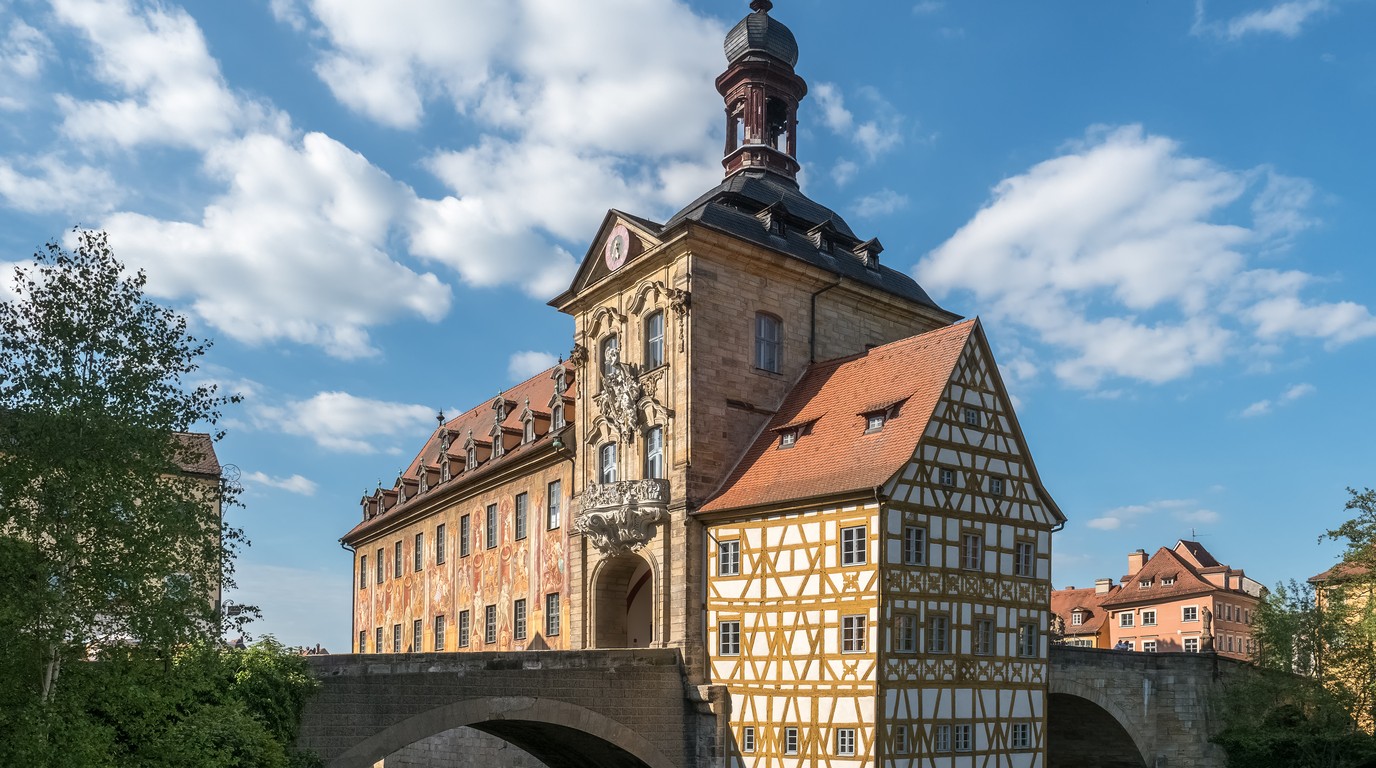
While summer visitors fill the beer gardens of the Upper Franconian countryside, Bamberg in winter reveals its most atmospheric, intimate character. Known throughout history as the “Franconian Rome” because it was built across seven hills by Holy Roman Emperor Henry II in the 11th century, the city boasts Europe’s largest intact historic old town. From standing on the Obere Brücke admiring the trompe-l’œil frescoes of the Old Town Hall to wandering past the half-timbered fishermen’s cottages of “Little Venice” (*Klein Venedig*) and marveling at the mysterious 13th-century stone Bamberg Horseman inside the Imperial Cathedral, a 48-hour winter weekend in Bamberg is an unforgettable feast of culture, craftsmanship, and historic Bavarian comfort.
Why You’ll Love Bamberg in Winter
- Completely Intact UNESCO World Heritage Core: Wander through more than 2,400 listed historic buildings spanning Romanesque, Gothic, Renaissance, and Baroque eras without modern intrusions.
- The World Capital of Smoked Beer (*Rauchbier*): Experience world-famous beechwood-kilned malt beer brewed continuously since 1405 at historic taverns like *Schlenkerla* and *Brauerei Spezial*.
- The Imperial Four-Towered Kaiserdom: Tour the breathtaking 13th-century Bamberg Cathedral, home to the tomb of Pope Clement II (the only papal burial north of the Alps) and Emperor Henry II.
- The Romantic Riverside of Klein Venedig: Stroll along the riverbank opposite picturesque 17th-century half-timbered fishermen’s houses adorned with wooden balconies and tiny boat docks.
Key Winter Highlights & Franconian Savoring

- Aecht Schlenkerla Rauchbier Märzen: Bamberg’s legendary dark, bottom-fermented smoked beer, brewed over open beechwood logs to impart a rich savory aroma reminiscent of smoked bacon and toasted malts.
- Fränkisches Schäufele: The crown jewel of Franconian winter comfort food: roasted pork shoulder on the bone with crackling crisp blistered skin, served in dark beer gravy with giant potato dumplings (*Kartoffelklöße*).
- Bamberger Zwiebel: A large hollowed-out local onion stuffed with seasoned minced pork, braised slowly in dark smoked beer sauce and topped with crispy bacon.
- Bamberger Hörnla: The beloved local pastry: a buttery, flaky crescent croissant made with pure butter that has been a breakfast staple since the Ottoman wars.
48-Hour Bamberg Winter Weekend Itinerary
Day 1: Island City, Bridge Town Hall & Historic Brewery Taverns
09:00 AM – The Architectural Wonder of the Altes Rathaus: Begin your journey at the Old Town Hall (*Altes Rathaus*). According to legend, when the ruling Bishop refused to grant land to the townspeople to build a town hall, the determined citizens drove oak piles into the middle of the Regnitz River to create an artificial island. Admire the half-timbered Rottmeisterhaus hanging over the river rapids and the vivid 18th-century Baroque frescoes painted directly onto the exterior stone walls.
11:00 AM – Walking the Fishermen’s Quarter (Klein Venedig): Walk north along the Am Leinritt path on the eastern bank of the Regnitz. Here, look across at “Little Venice” (*Klein Venedig*), a picturesque row of tiny 17th-century timber-framed fishermen’s cottages with steep gable roofs, cozy boat landings, and wooden balconies dusted with snow.
12:30 PM – Traditional Lunch at Schlenkerla: Step into the historic *Historische Rauchbierbrauerei Schlenkerla* on Dominikanerstraße. Slide onto a dark wooden bench under the low vaulted timber ceilings of the *Dominikanerstube*, order a wooden-tapped gravity-poured seidel of Rauchbier, and enjoy a piping hot Franconian Schäufele with potato dumpling.

02:30 PM – Climb the Domberg to the Imperial Cathedral: Climb through the medieval alleys up to the Domplatz to explore the Bamberg Cathedral of Saint Peter and Saint George (*Bamberger Dom*), consecrated in 1237. Marvel at the enigmatic *Bamberger Reiter* (Bamberg Horseman)—Europe’s first monumental equestrian statue sculpted since antiquity—and the magnificent carved marble imperial tomb of Emperor Henry II and Empress Cunigunde created by Tilman Riemenschneider.
04:30 PM – Neue Residenz & Winter Rose Garden View: Walk across the Domplatz into the inner courtyards of the *Neue Residenz*, the lavish 17th-century palace of the Prince-Bishops. Step out onto the terrace of the Rose Garden (*Rosengarten*) to enjoy a magnificent panoramic winter vista looking down across the sea of terracotta roofs, church spires, and Michaelberg Abbey.
07:30 PM – Evening Tasting at Brauerei Spezial: Head to the historic Wunderburg district to dine at *Brauerei Spezial*, operating since 1536. Sample their gentler, beechwood-smoked *Ungespundetes* lager paired with Franconian bratwurst and homemade sauerkraut.
Day 2: Monastery Terraces, Baroque Palaces & Mountain Cellars
09:30 AM – Michaelsberg Abbey (Kloster St. Michael): Ascend to the highest of Bamberg’s seven hills to visit St. Michael’s Abbey, an 11th-century Benedictine monastery complex. Marvel at the famous painted herbal ceiling inside the abbey church, displaying nearly 600 accurate botanical illustrations of medicinal herbs and flowers painted in 1617.

11:30 AM – The Franconian Brewery Museum: Tour the *Fränkisches Brauereimuseum* located in the former abbey brew-house, learning about five centuries of regional malt kilns, copper kettles, and beer barrel craftsmanship.
01:30 PM – Lunch at Brauerei Fässla: Savor a hearty winter bowl of *Bamberger Zwiebel* at *Brauerei Fässla*, accompanied by their famous dark *Zwergla* mahogany ale.
03:30 PM – Historic Market Gardeners’ District (Gärtnerstadt): Explore the unique *Gärtnerstadt* (Market Gardeners’ Quarter), where urban farming families have cultivated regional vegetables, herbs, and unique local potatoes (*Bamberger Hörnchen*) since the Middle Ages in vast open fields situated directly behind historic farmhouses.
07:00 PM – Fireside Evening in the Sandstraße: Conclude your weekend break along the cobbled Sandstraße, hopping between cozy candlelit wine taverns and craft beer taprooms to toast an unforgettable winter escape.
3 Insider Secrets for Visiting Bamberg in Winter
1. The “Zweite Seidla” Rauchbier Rule: Franconian locals have a famous saying about smoked beer: the first glass tastes unusual, the second tastes good, and the third tastes indispensable! Give your palate time to adjust to the intense beechwood aroma before deciding on your verdict.
2. Best Altes Rathaus Photo from Geyerswörthsteg: For the most spectacular angle of the Old Town Hall hanging over the rushing water, head onto the pedestrian wooden footbridge *Geyerswörthsteg* located just south of the main bridge.
3. Buy Genuine Bamberger Hörnchen Potatoes: If browsing the green markets, look for the prized *Bamberger Hörnchen*—a fingerling heirloom potato with a rich waxy texture and nutty flavor, cultivated in the city’s market gardens since 1870.
What to Savor & Historic Brauereigasthöfe
- Schlenkerla (Dominikanerstraße 6): The world’s most famous smoked beer tavern, serving wooden-barrel-tapped Rauchbier and legendary Franconian Schäufele.
- Brauerei Spezial (Obere Königstraße 10): Family-run brewery since 1536 offering delicate beechwood-kilned smoked beers and homemade Franconian roasts.
- Klosterbräu (Obere Mühlbrücke 3): Bamberg’s oldest operating brewery dating back to 1533, celebrated for rich Braunbier and roasted duck.
- Café Riffelmacher (Obere Brücke 12): Elegant historic pastry shop directly opposite the Town Hall, perfect for freshly baked Bamberger Hörnla pastries and hot chocolate.
Practical Winter Travel Logistics & Getting Around
- Arrival & Transit: Bamberg Hauptbahnhof is connected by direct 30-minute ICE and RE trains to Nuremberg, and 2-hour direct ICE trains to Frankfurt and Munich.
- Winter Weather: Daytime temperatures in winter average between -2°C and 3°C (28°F–37°F). Crisp frost and dusting snow turn the baroque gables and river rapids into an enchanting winter postcard.
- What to Pack: Warm thermal layers, waterproof walking boots with good traction for steep cobblestone alleys on the Domberg, and a warm woolen hat and gloves.
Where to Stay in Bamberg in Winter
- Inselstadt (Island City): Steps from the Altes Rathaus, shopping lanes, and river bridges, ideal for first-time weekend visitors.
- Bergstadt (Cathedral Hill): Historic, quiet cobblestone streets surrounding the Kaiserdom and Neue Residenz, offering romantic historic atmosphere.
- Sandgebiet: The historic bohemian nightlife district at the foot of the Domberg, close to traditional breweries and wine bars.
Frequently Asked Questions About Bamberg in Winter
Is 48 hours enough time to visit Bamberg?
Yes, 48 hours is ideal to explore both the Island City and the Hill City, tour the Imperial Cathedral, and experience several of Bamberg’s famous historic brewery taverns.
Are Bamberg’s historic breweries open during winter?
Yes, Bamberg’s brewery taverns like Schlenkerla, Spezial, and Fässla operate year-round with warm indoor dining rooms and roaring hearths.
Can I visit Bamberg as a day trip from Nuremberg?
Yes, frequent direct regional express trains connect Nuremberg Hbf to Bamberg in just 35 to 45 minutes, making it an effortless winter excursion.
Save This Bamberg Winter Itinerary on Pinterest
Planning your winter weekend escape to Germany’s UNESCO-listed beer capital? Pin this complete 48-hour Bamberg travel guide to your Pinterest boards for fast access to Old Town Hall views, smoked beer taverns, and historic dining spots!

Leave a Comment