
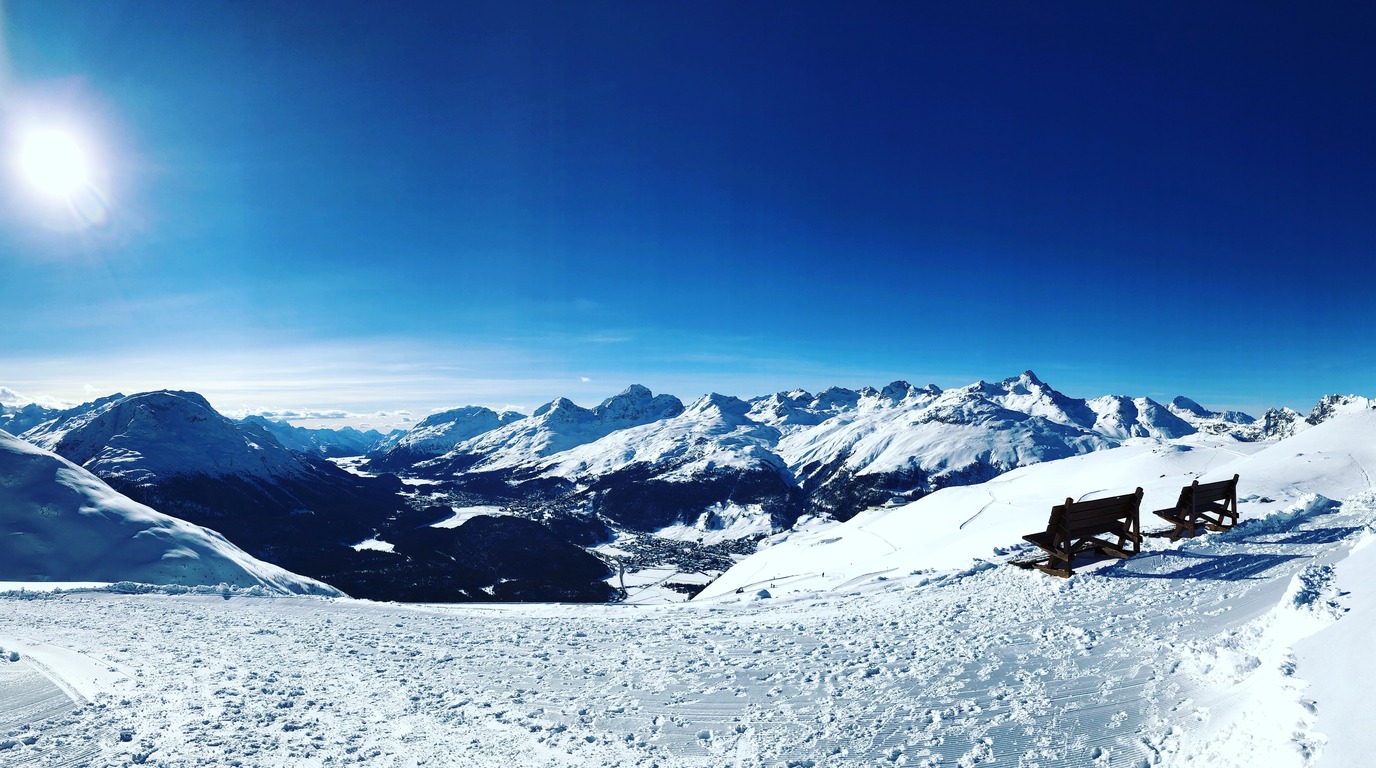
Perched 1,800 meters high in Switzerland’s sun-drenched Upper Engadin valley, St. Moritz stands as the undisputed birthplace of winter alpine tourism. When the crisp winter air bites and the great alpine lake freezes into a vast glittering plain beneath the jagged peaks of Corviglia and Piz Nair, this legendary enclave transforms into a wonderland where champagne climate meets Olympic winter heritage.
Arriving via the iconic red coaches of the Rhaetian Railway—whether winding along the UNESCO-inscribed Albula line or completing the epic Glacier Express journey—the transition into the Engadin valley feels distinctly cinematic. In just 48 hours, you can carve world-class corduroy on Corviglia’s morning slopes, walk across the ice of Lake St. Moritz, savor authentic walnut tarts in centuries-old patisseries, and watch the sunset blaze across the Bernina Massif from Muottas Muragl.
Why St. Moritz in Winter Is Pure Magic
- The Famous Champagne Climate: Boasting an average of 322 days of sunshine per year, St. Moritz combines pristine deep powder with crystalline, dry alpine skies.
- Dual Winter Identity: Beyond the haute couture boutiques of Via Serlas and five-star historic palaces, St. Moritz offers raw, untamed alpine terrain, frozen lake polo, and historic bobsleigh tracks.
- Seamless Swiss Transport: The integrated Engadin bus network and mountain funiculars whisk you from village center to 3,000-meter peaks in less than 20 minutes.
- Historic Engadin Gastronomy: Cozy wood-paneled Arvenholz stüblis serving hearty capuns, melted Swiss raclette, and caramelized Engadiner Nusstorte provide the ultimate antidote to sub-zero temperatures.
The 48-Hour Winter Weekend Itinerary
Day 1: Corviglia Heights, Alpine Views & St. Moritz Dorf
08:30 – First Tracks on Corviglia: Take the Chantarella funicular directly from St. Moritz Dorf up to Corviglia (2,486m). Even for non-skiers, the panoramic terrace at the mountain station offers sweeping 360-degree vistas across the frozen lake chain extending toward Maloja. If conditions allow, continue on the cable car to Piz Nair at 3,057 meters, where a dramatic bronze ibex statue surveys the Engadin peaks.
12:30 – Mountain Lunch & Engadin Specialties: Settle into a sunlit mountain terrace for lunch. Warm up with a steaming bowl of traditional Bündner Gerstensuppe (rich barley soup with diced cured bacon and root vegetables) accompanied by crusty dark rye bread.

15:30 – Village Stroll & Patisserie Hanselmann: Descend back to St. Moritz Dorf. Stroll past the iconic Leaning Tower (Schiefer Turm), a remnant of the 12th-century St. Mauritius church, before ducking into the historic café Hanselmann. Its sgraffito-adorned facade gives way to cozy tea salons where you must sample their legendary Engadiner Nusstorte with a dark hot chocolate.
19:30 – Classic Swiss Fondue: Head to a traditional tavern like Chesa Veglia or Restaurant Engiadina for a classic moitié-moitié fondue (Gruyère AOP and Vacherin Fribourgeois melted with white wine and kirsch), dipped with crusty bread cubes and boiled baby potatoes.
Day 2: Frozen Lake St. Moritz, White Turf & Muottas Muragl Sunset
09:30 – Walking the Frozen Lake (St. Moritzersee): In peak winter (January to late February), Lake St. Moritz freezes solid beneath a blanket of packed snow. Step directly onto the groomed ice trails. Walking across the lake provides unforgettable reflections of the grand hillside hotels and distant mountain ridges.

13:00 – St. Moritz Bad & Lakeside Leisure: Follow the southern lake path down to St. Moritz Bad, the historical spa sector where the natural mineral springs were first discovered over 3,000 years ago. Browse local woodcraft boutiques or relax at the modern Ovaverva indoor pool and spa complex.
16:00 – Sunset Funicular to Muottas Muragl: Hop on the short 10-minute bus or train ride to Punt Muragl, then board the historic red funicular railway climbing up to Muottas Muragl (2,456m). Arrive just before golden hour: as the sun dips behind the Bernina range, the entire chain of frozen Engadin lakes glows in violet, rose, and burnished gold.
Essential Winter Logistics: Getting There & Around
- By Train: The journey via the Rhaetian Railway (RhB) is half the destination. Take the Swiss Federal Railways (SBB) to Chur or Landquart, then transfer to the narrow-gauge RhB line climbing over the Landwasser Viaduct directly into St. Moritz Bahnhof. The Swiss Travel Pass fully covers the entire journey.
- Local Engadin Bus: The local Engadin Bus network operates high-frequency lines connecting St. Moritz Dorf, St. Moritz Bad, Pontresina, Celerina, and Silvaplana. If you stay 2 or more nights at participating accommodations, the Engadin Public Transport pass is often included free of charge.
- Mountain Transit: Ski passes and mountain railway tickets can be booked online via the “Snow-Deal” dynamic pricing engine; booking weeks in advance delivers substantial savings compared to on-the-day ticket window rates.
What to Pack for an Engadin Winter Break
St. Moritz sits at high altitude where temperatures frequently drop to -15°C (5°F) in January and February. Strict technical layering is vital for enjoying the outdoor pursuits:
- Base Layer: 200–250g pure merino wool thermal tops and leggings to wick moisture during active hikes while retaining body heat.
- Mid Layer: A breathable fleece jacket or lightweight packable down sweater for flexible temperature modulation.
- Outer Shell: A windproof, waterproof GORE-TEX jacket and insulated winter trousers. High alpine wind chill on Corviglia and Muottas Muragl demands absolute wind resistance.
- Footwear: Waterproof winter boots with deep lugged Vibram soles. For walking on the groomed lake ice, slip-on microspikes (Yaktrax) provide immense confidence.
- Accessories: Polarized sunglasses (UV radiation reflected off snow is extreme at 2,500m), high-SPF mineral sunscreen, wind-resistant gloves, and a cashmere or merino beanie.
Where to Eat: From Rustic Chesas to High-Altitude Glitz

- Café Hanselmann (Dorf): An institution since 1894. Perfect for breakfast pastries, artisanal chocolates, and the definitive Engadiner Nusstorte.
- Chesa Veglia (Badrutt’s Palace): A converted 1658 farmhouse housing three distinct restaurants: the rustic Pizzeria Heuboden, the traditional Dorta for Swiss specialties, and the intimate Grill Chamin.
- White Marmot Restaurant & Bar (Corviglia): Gourmet alpine dining set at 2,486m combining modern Swiss fusion with floor-to-ceiling panoramic views of the Upper Engadin peaks.
- Restaurant Engiadina: A beloved authentic wood-paneled tavern in St. Moritz Dorf serving exquisite cheese fondues, raclette, and hearty Bündnerfleisch platters.
Where to Stay in St. Moritz
- Historic Luxury – Badrutt’s Palace Hotel: The pinnacle of Swiss Grand Hotel heritage since 1896, overlooking Lake St. Moritz with world-class spa facilities and private butler service.
- Boutique Alpine – Hauser Hotel St. Moritz: Situated right in the heart of St. Moritz Dorf. Famous for its on-site confectionery, locally sourced Engadin timber rooms, and warm, family-run hospitality.
- Active & Central – Hotel Schweizerhof: Elegant classic hotel located steps from the Chantarella funicular, boasting panoramic rooftop saunas and relaxed alpine dining.
Budget Pro-Tips for an Ultra-Luxe Enclave
- Book Mountain Passes Early via Snow-Deal: The Upper Engadin uses dynamic ski pass pricing. Purchasing your lift pass online 30 to 60 days in advance can save up to 35% compared to peak day-of window prices.
- Take Advantage of the Hotel Skipass: Many local hotels participate in the “Sleep + Ski” initiative, allowing guests to purchase heavily subsidized daily ski passes for each night of their stay.
- Utilize Co-op and Migros for Picnics: Pick up local Bündner Bergkäse (mountain cheese), air-dried beef, and fresh alpine breads from the local supermarkets in St. Moritz Dorf or Bad for scenic outdoor lunches.
Frequently Asked Questions
Is St. Moritz worth visiting if you don’t ski?
Absolutely. St. Moritz is world-renowned for its winter walking trails, frozen lake polo and horse racing events (White Turf), luxury shopping, scenic funiculars like Muottas Muragl, and thermal spa facilities at Ovaverva.
When does Lake St. Moritz freeze over?
The lake typically freezes solid from mid-January through late February or early March, depending on seasonal temperatures. Groomed walking trails across the ice are opened only after rigorous municipal ice-thickness testing.
What is the best way to get to St. Moritz from Zurich?
Take the direct SBB train from Zurich HB to Chur (1 hour 15 minutes), then transfer to the scenic Rhaetian Railway (RhB) across the Albula Pass to St. Moritz (2 hours). The total trip takes approximately 3 hours and 15 minutes.
Pin This St. Moritz Winter Guide for Later
Planning your dream Swiss alpine getaway? Save this 48-hour itinerary to your Pinterest travel board so you have all the routes, mountain passes, and packing essentials ready!

Leave a Comment